Landing pages, analytics and ads, in a self-improving loop.
Where do people land after they click your ad? We build that page, track what every visitor does, and use it to make both the ads and the page better.
See exactly where people get stuck.
On your landing page, and past it: booking or sign-up, onboarding and, if you sell software, the product itself.
Then we test a fix against what’s there now, and keep it only if more people get through.
What do we work on?
Ads
Meta, Google, native, LinkedIn, the App Store: wherever you promote. We can run your ads, or work with the ad team you already have.
Landing pages
Researched, written, designed and built to match your ad, with questions that keep poor fits off your calendar.
Analytics
Every visit tracked and recorded, so you see where people drop off. Your best leads go back to your ad platform, so it learns who to find.
Product design
Sign-up, onboarding and the product itself, designed so people reach the point where it is worth paying for.
SEO and content
How good your organic traffic is, and the path from content to customer: a webinar, your website, a LinkedIn bio, tracked like the ads.
Booking, CRM and automation
What happens after someone responds: the booking flow, the CRM and the follow-up, so good leads do not go cold.
Why not just hire an ads agency?
Many agencies are organised around something they sell. A paid media agency needs advertising to be the answer.
That model can work well when you already know exactly what you need. It is a weaker way to decide what your business should do next.
Character Strategy starts with that decision. We work out what is most likely to matter, then bring the right capabilities around it.
If people are getting stuck at onboarding, more ads only send more people to the same place.
Sometimes the answer is advertising. Sometimes it is something else entirely.
What does a typical project look like?
- We look at your ads, your page and your numbers, and find where people get stuck.
- We set up tracking, so every visit, click and answer is recorded.
- We research, write, design and build the page to match your ad.
- We launch it with your ads, run by us or by whoever runs them now.
- We test fixes against what is there now, and keep what wins.
- Then we decide what to change next: the ads, the page, the booking or the product.
What are we betting on?
There is no way to know with certainty what will grow a business before you try it. But you can make a calculated bet.
Before we change anything, we should be able to explain:
- what we think will change
- why we think it will change
- what evidence would tell us we were right
- how much time or money makes sense to commit before we know more
Then we watch what actually happens. The next decision should be better informed than the last one. If the evidence points somewhere else, the work should move with it.
That is the difference between a calculated bet and a gamble.
Who keeps hold of the context?

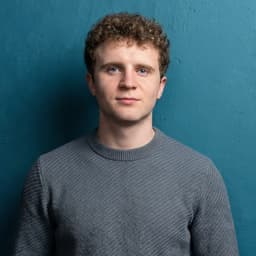
Timothy Highnam
I lead every project myself. Before Character Strategy, I built and sold a marketing agency.
More about TimAssociates contribute when a particular problem needs specialist expertise.
You should not explain the business to one person, have the work passed to another and receive a report from somebody who was never involved in deciding why it was being done.
The specialists can change. The reasoning should not get lost between them.
Do you need an outsourced marketing department?
Perhaps. But you may need less than that.
If you already have good marketers, developers or other specialists, replacing them would make little sense. They know things about the business that we do not.
The aim is not to recreate a marketing department outside your company. It is to make sure the right work gets done by the right people for the right reason.
How does the work start?
Usually with a conversation about the business and what you want to change.
From there, the first piece of work might be an audit, an assessment or a launch. These give us a defined problem to work on without asking you to make a large commitment before either side knows enough.
Sometimes that initial work is useful on its own. More often, it gives us the information needed to decide what should happen next.
Most ongoing work is structured as a retainer or advisory relationship.
Retainer
A retainer makes sense when Character Strategy is helping direct and execute the work over time. Priorities can change as we learn more, without forcing every new decision into a separate project.
Advisory
Advisory works when you already have people capable of doing the work but want another senior view on the decisions.
Projects
Projects are less common. They tend to be defined audits, assessments or similar pieces of work that make sense as a contained commitment.
There is no formal minimum term. That does not mean every piece of work is a sensible fit. We may decline something that is too small for our involvement to make sense, or where we do not think Character Strategy is likely to add enough value.