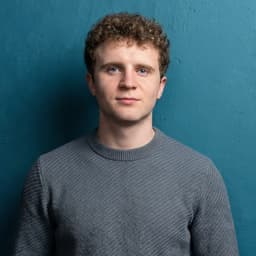
Who is Timothy Highnam?
Timothy Highnam is the founder of Character Strategy. He also runs Seven Sigma Group, a software studio.
Before starting his own companies, Tim worked in Strategy & Operations at Deloitte from 2018 to 2021. He later built and exited a marketing agency before moving further into software with Seven Sigma Group.
Those businesses have kept him close to different parts of the same problem. You can build an excellent product that people do not want. You can create demand that a business cannot turn into valuable customers.
- Strategy & Operations
- Marketing
- Software

Tim has become wary of solving the wrong problem well.
Why marketing and software?
Software makes bad assumptions expensive.
Build the wrong thing and a team can spend months improving something the customer never needed.
Marketing can make the same mistake faster.
Put the wrong proposition in front of more people and you simply expose the problem to a larger audience.
Working across both disciplines has made Tim less interested in beginning with a tactic.
A campaign or a product can work exactly as intended and still be the wrong answer.
The useful question comes earlier: what actually needs to change?
How is Character Strategy structured?
Character Strategy is built to keep context close to the work.
- Strategy
- Creative
- Technology
- Execution
Associates contribute specialist expertise when it is useful, without requiring you to repeatedly explain the business as different people become involved.
Tim keeps the wider picture in view while the work moves between strategy, creative, technology and execution.
The structure is deliberately simple. Bring in the expertise the problem needs without losing sight of why the work is being done in the first place.
Is this relevant to a business like yours?
There is no preferred industry or neat profile you need to match.
The businesses may be different, but the situations are usually recognisable.
- Something is harder than it should be.
- Growth has slowed.
- An offer is not landing.
- Customers are expensive to win.
- A new product needs a market.
- Or the business is doing reasonably well and you suspect there is a better opportunity somewhere inside it.
Those are different problems, and they should lead to different answers.
Tim is resident in Dubai. His working day overlaps naturally with Europe and the Gulf, and extends into US hours when needed.
If there is something in the business worth thinking through,